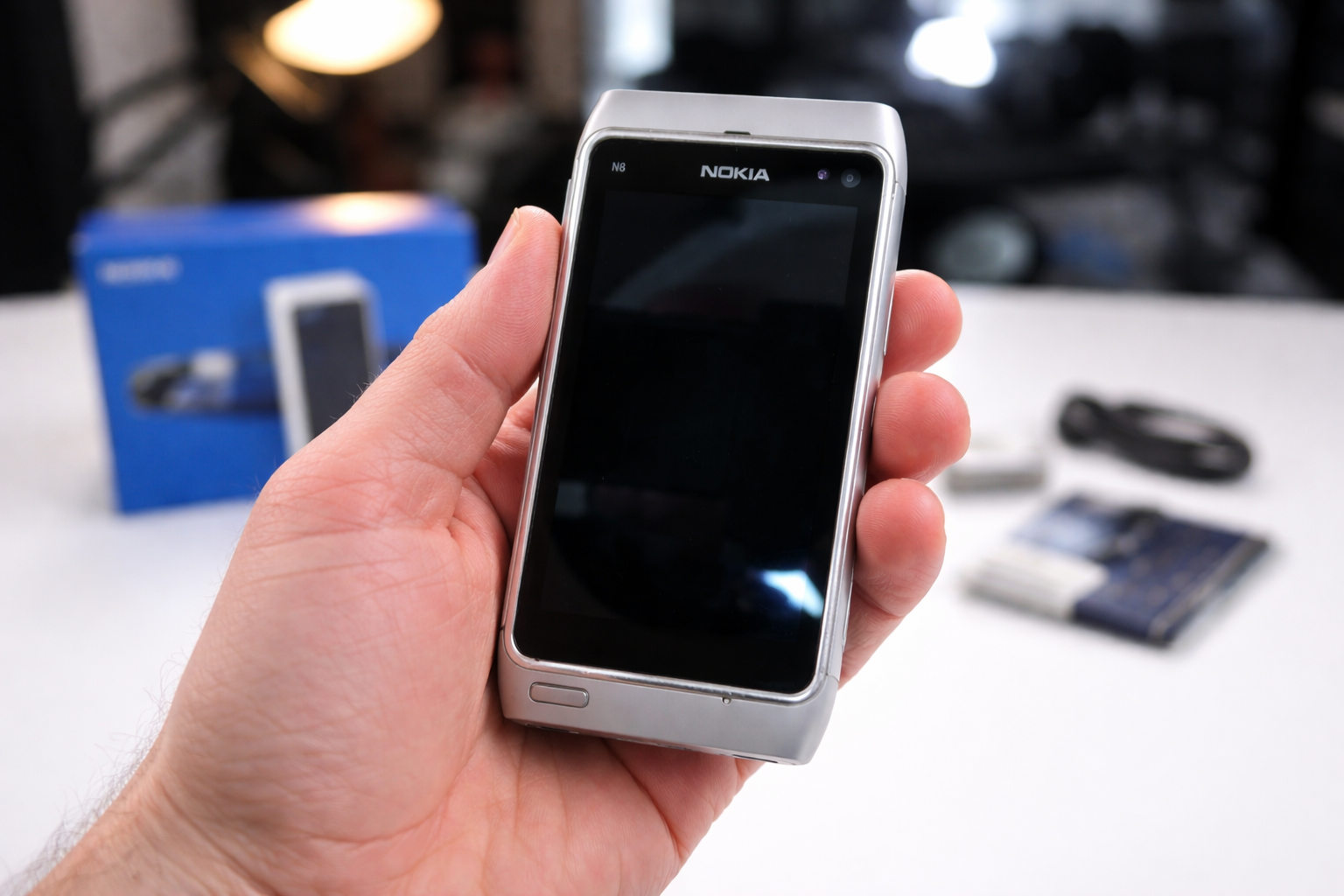
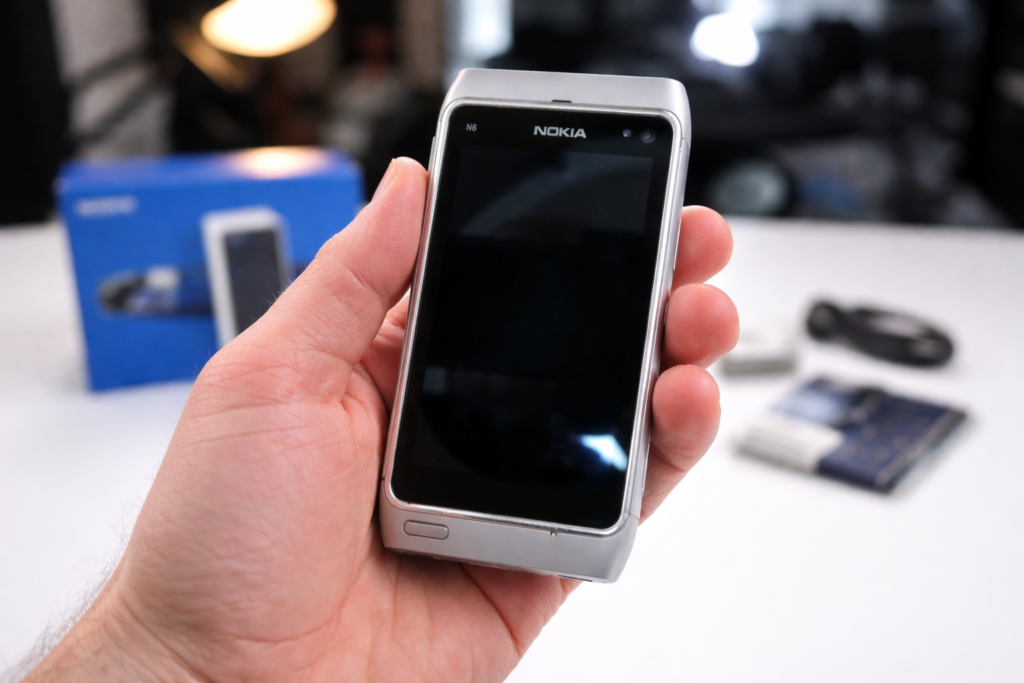
In the fast-paced world of smartphone evolution, few devices carry the “legendary” status quite like the Nokia N8. Originally released in 2010, the Nokia N8 wasn’t just a phone; it was a statement. As we look at the current mobile landscape in 2026, there is a growing movement to bring the Nokia back to life through custom ROMs and enthusiast projects. This article explores why the Nokia remains a masterpiece of engineering and how the Nokia N8 continues to influence mobile technology today.
Nokia always provides its customers with the best premium phone within a low budget because Nokia always knows that customers want good quality within a low budget and keeping ISI in mind, Nokia always makes its smartphones in such a way that any customer can easily buy this phone because whether in India or other countries, everyone wants good quality with low cost.
This time also a similar phone has been launched which has a huge difference from other smartphone companies in the market, be it its display or screen or its look. If you are also fond of smartphones, especially from our oldest company Nokia, then this phone is a good option for you.
1. The Design Philosophy of the Nokia N8
When you first hold a Nokia N8, the build quality is immediately apparent. Unlike the plastic-heavy competitors of its era, the Nokia featured a premium anodized aluminum unibody design.
- Ergonomics: The curved edges of the Nokia made it one of the most comfortable devices to hold.
- Durability: The Nokia N8 was built to last, surviving drops that would shatter modern glass sandwiches.
- Color Variety: Nokia wasn’t afraid of personality, offering the Nokia in vibrant oranges, blues, and greens.
The physical presence of the Nokia served as a reminder that a phone should feel like a high-end tool, not just a disposable gadget.
2. The 12MP Carl Zeiss Camera: A Revolution
The crowning achievement of the Nokia was undoubtedly its camera. Long before “computational photography” became a buzzword, the Nokia relied on pure hardware excellence.
Why the Nokia N8 Camera Was Special:
- Large Sensor Size: The Nokia featured a 1/1.83″ sensor, which was massive for its time.
- Xenon Flash: While others used weak LEDs, the Nokia utilized a real Xenon flash, allowing for perfect low-light “freeze-frame” photography.
- Mechanical Shutter: The Nokia included a physical mechanical shutter, a rarity even in today’s flagship market.
Even in 2026, enthusiasts are revisiting the Nokia to capture photos with that “organic” look that modern AI-processed images often lack. The Nokia proved that hardware optics are the foundation of great imaging. www.nokia.com
3. The Symbian^3 OS and the Modern Revival
The Nokia N8 debuted with Symbian^3, an operating system that offered true multitasking and USB On-The-Go (OTG) capabilities—features that were years ahead of the competition.
However, as seen in recent news, the Nokia is experiencing a “second life.” Developers are creating custom ROMs for the Nokia that fix old bugs and optimize the interface for modern use. This revival proves that the Nokia hardware is so robust that users are willing to go to great lengths to keep the Nokia functional in a world dominated by Android and iOS.
4. Technical Specifications Recap
To understand the power of the Nokia N8, we must look at the specs that defined an era:
| Feature | Specification of the Nokia N8 |
|---|---|
| Display | 3.5-inch AMOLED with Gorilla Glass |
| Processor | 680 MHz ARM 11 |
| RAM | 256 MB |
| Storage | 16 GB Internal (Expandable via MicroSD) |
| Camera | 12 MP Carl Zeiss Optics, Xenon Flash |
| Battery | 1200 mAh (Optimized for Symbian efficiency) |
While these numbers seem small now, the Nokia utilized every megahertz and megabyte to provide a fluid, specialized experience.
5. Why the Nokia N8 is a Collector’s Dream
As the search results in your image suggest, the Nokia has become a high-value item on the pre-owned market. Whether it’s a “Vintage Nokia ” on Etsy or a refurbished Nokia N8 on Tradeindia, people are paying a premium for this device.
The Nokia represents the pinnacle of Nokia’s “Hardware First” era. For collectors, owning a Nokia is about owning a piece of history—a time when phones had distinct identities and built-in HDMI ports (another incredible feature of the Nokia.
6. Using the Nokia N8 in 2026: Is it Possible?
You might wonder if the Nokia can still function today. Thanks to the “Legendary Nokia is back” movement, the answer is a surprising “Yes.”
- Music Player: The Nokia N8 has an excellent dedicated audio chip.
- Offline GPS: The Nokia N8 was famous for its free, high-quality offline maps.
- Retro Gaming: Many classic Symbian games run beautifully on the Nokia N8.
The Nokia N8 serves as a perfect secondary “digital detox” device for those who want to stay connected without the distractions of modern social media algorithms.
7. The Legacy of the Nokia N8
The DNA of the Nokia N8 lived on in the 808 PureView and eventually influenced the high-end Lumia series. Every time you use a smartphone with a high-resolution sensor or a dedicated shutter button, you are seeing the ghost of the Nokia N8. Nokia 5G New Launch 2026: iphone कि छुट्टी करने आया Nokia G15 5G और 7610 के फीचर्स और Price!
The Nokia N8 was the bridge between the “feature phone” era and the “superphone” era. It pushed the boundaries of what we expected from a mobile camera and challenged the industry to do better.
The Multimedia Powerhouse: HDMI and Pentaband Radio
One of the most overlooked aspects of the Nokia was its role as a pocket-sized media center. The Nokia was among the first smartphones to feature a dedicated Mini-HDMI port. This allowed users to plug the Nokia directly into a television to output 720p video with Dolby Digital Plus Surround Sound. In 2010, the idea that a Nokia could replace a DVD player was revolutionary.
Furthermore, the Nokia featured “Pentaband” roaming technology. While other phones were locked to specific regional frequencies, the Nokia was designed for the global traveler, ensuring high-speed data connectivity across multiple continents. The Nokia was truly built for a world without borders.
9. Connectivity Beyond Its Time: USB On-The-Go (OTG)
Long before it became a standard feature on modern Android devices, the Nokia N8 introduced USB On-The-Go. This meant that a Nokia N8 user could plug a standard USB flash drive directly into the phone to transfer files. This level of file management made the Nokia N8 a favorite among professionals who needed to move documents or photos without needing a PC as an intermediary. The Nokia N8 treated its storage like a computer, giving users a level of freedom that was unheard of at the time.
10. The Display: AMOLED and ClearBlack Technology
The visual experience of the Nokia N8 was driven by its 3.5-inch AMOLED screen. However, it wasn’t just about the colors; the Nokia N8 utilized Nokia’s proprietary ClearBlack technology. This polarizing filter on the Nokia N8 reduced reflections and improved contrast, making the screen perfectly readable even under direct sunlight. This focus on outdoor usability is something many modern budget phones still struggle with, yet the Nokia N8 mastered it over a decade ago.
11. FM Transmitter: A Forgotten Gem
The Nokia N8 was more than a sum of its parts; it was a Swiss Army knife of technology. As we look at the Nokia N8 today, we see a device that didn’t just follow trends—it set them.
Conclusion
The Nokia N8 remains an icon for a reason. From its indestructible aluminum body to the legendary Carl Zeiss lens, the Nokia N8 stands as a testament to Nokia’s innovation. Whether you are a tech historian or a photography enthusiast, the Nokia N8 deserves a spot in your collection. The Nokia N8 isn’t just a phone from the past; it is a reminder of a time when mobile technology felt magical.