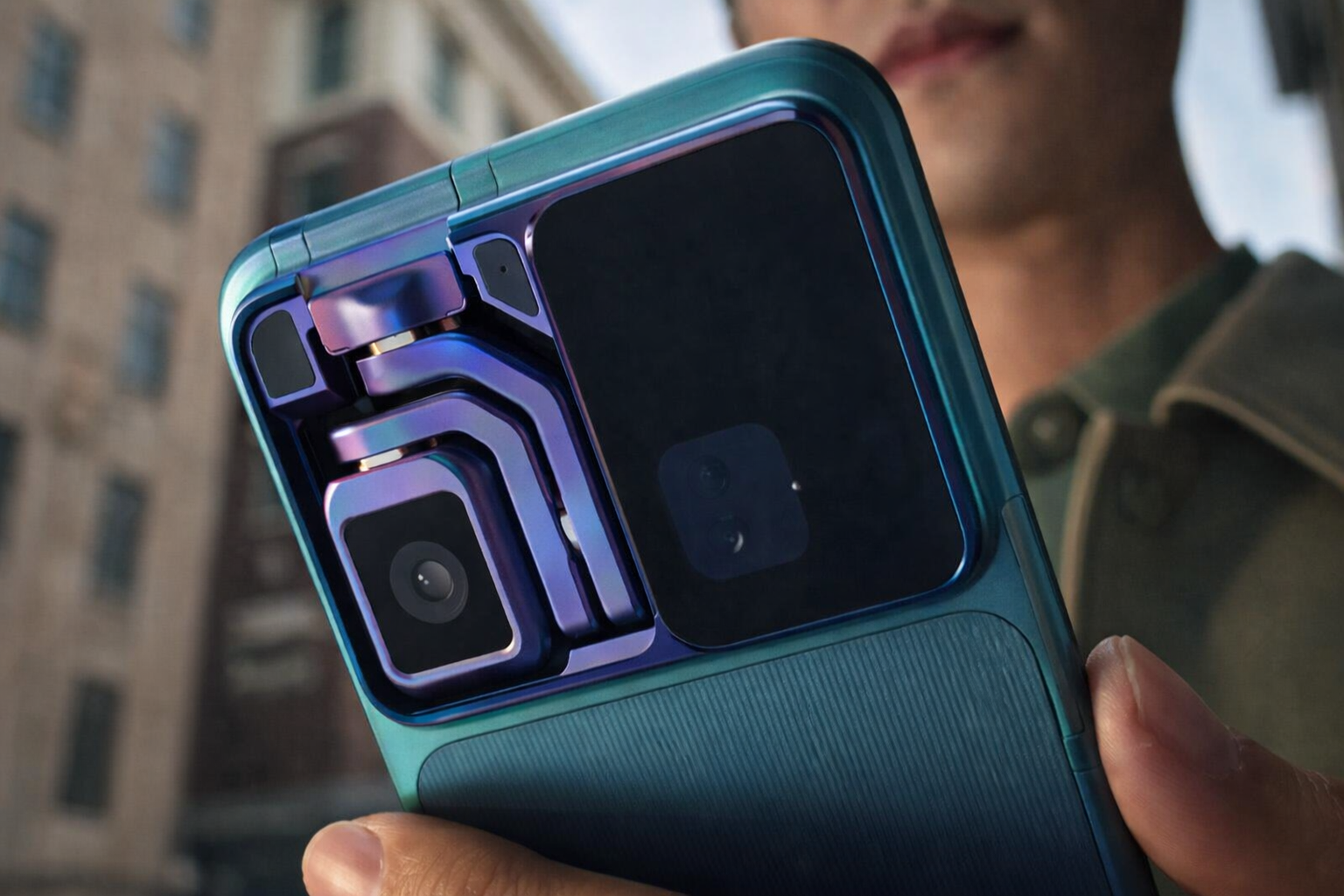
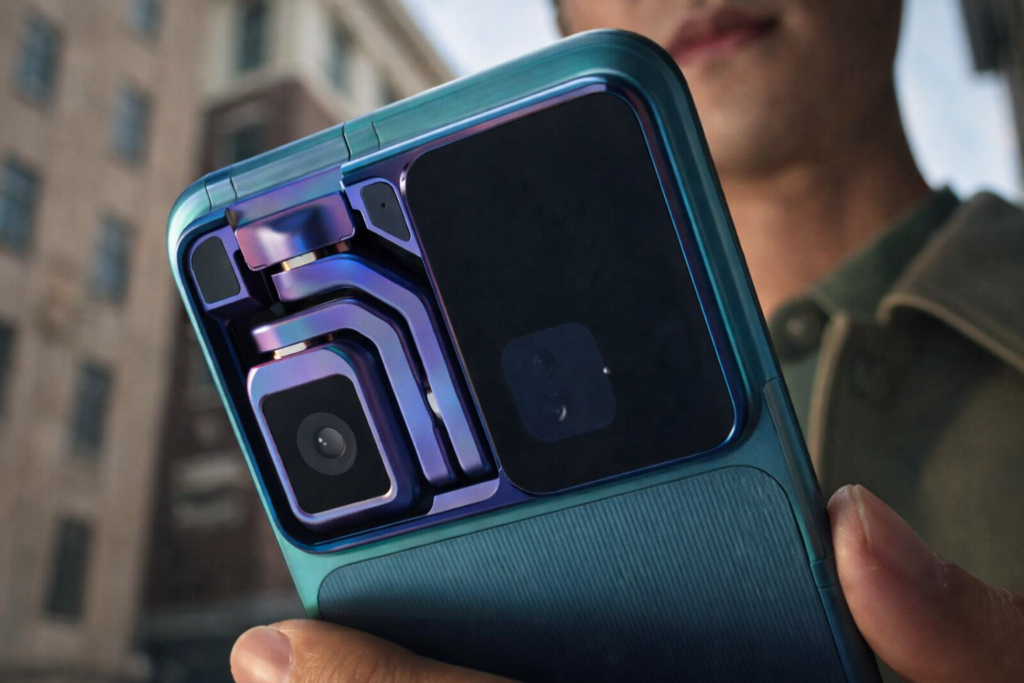
The smartphone industry has reached a point where incremental updates—a slightly faster processor or a marginally brighter screen—no longer excite the masses. However, Honor has just shattered that stagnation. On March 5, 2026, the tech world stood still as Honor officially demonstrated the groundbreaking rotating camera feature of the ROBOT PHONE.
Honor has once again launched its new phone which is different from all and is at the forefront of technology. I am saying this because Honor has added something in its phone this time which you can never imagine. The thing which is most needed by people, the reason for which people buy a phone, is the camera. After adding a robotic camera in it, it gives a different professional look to the phone and along with that, it attracts you even more with its quality and camera quality. If you are thinking of buying a new camera phone of this type, then this is the best option for you.
This isn’t just another camera phone; it is a shift toward robotic integration in personal electronics. In this deep dive, we explore how Honor is redefining the “smartphone” label.
1. What is the Honor Robot Phone?
The Honor Robot Phone represents a new category of mobile devices. Moving beyond the static glass-and-metal slabs we’ve used for a decade, this device incorporates active robotics and AI-driven hardware. The headline feature, of course, is the rotating camera module that acts more like a robotic eye than a traditional lens.
Key Highlights of the Demonstration:
- 360-Degree Tracking: The camera doesn’t just sit there; it follows the subject dynamically.
- Automated Perspective: The phone can adjust its own physical orientation to find the best lighting and angle.
- Mechanical Precision: A silent, high-torque micro-motor system that ensures smooth rotation without vibration.
2. The Game-Changer: The Rotating Camera Feature
The Honor Robot Phone rotating camera is the star of the show. Unlike the “pop-up” cameras of the past, which were purely for hiding the selfie lens, this robotic system serves functional, creative, and professional purposes.www.honor.com
Kinetic Subject Tracking
Imagine placing your phone on a table for a video call or a vlog. As you move around the room, the rotating camera physically pivots to keep you centered in the frame. Using advanced AI spatial awareness, it predicts movement, ensuring you never “walk out of shot.”
Professional-Grade Panoramas
Standard panoramic photos often suffer from “stitch lines” or blurring caused by shaky hands. The Robot Phone executes a perfect, mechanically stabilized 360-degree sweep, producing distortion-free architectural and landscape images that rival professional DSLR rigs.Honor X6d Launched: 5G Power, 6500mAh Battery, and 256GB Storage on a Budget
3. The Tech Behind the Motion: AI meets Robotics
Honor’s demonstration highlighted that this isn’t just a “spinning lens.” It is powered by a dedicated Neural Processing Unit (NPU) designed specifically for spatial robotics.
- Zero-Latency Response: The camera reacts to movement in milliseconds.
- Obstacle Awareness: Sensors ensure that the camera module doesn’t hit objects or fingers while rotating.
- Silent Operation: Honor has utilized “Acoustic Dampening” technology, making the mechanical rotation completely inaudible during video recording.
4. Practical Use Cases: Who is this for?
| User Category | How They Benefit |
|---|---|
| Content Creators | Solo-shooting becomes easy as the phone acts as its own cameraman/gimbal. |
| Remote Professionals | In meetings, the camera can pivot to follow different speakers in a room. |
| Security/Monitoring | The phone can act as a 360-degree smart home monitor while charging. |
| Photography Enthusiasts | Access to unique angles and automated “motion-lapse” videos. |
5. Challenging the Status Quo
For years, Samsung and Apple have focused on “Computational Photography” (software). Honor is now pivoting—literally—toward Mechanical Photography. By changing the hardware’s physical state, Honor provides a solution to the hardware limitations of a fixed lens.
This move signals Honor’s intention to be the leader in the “Post-Smartphone Era,” where devices are more like intelligent companions than passive tools.
6. The Verdict: Is the Robot Phone the New Standard?
While some might see a rotating camera as a “gimmick,” Honor’s demonstration proves otherwise. The Honor Robot Phone rotating camera solves a genuine pain point for the modern era: the need for a dynamic, hands-free capture experience.
As we move further into 2026, it is clear that Honor is no longer following trends—they are setting them. The Robot Phone is a bold, mechanical leap into a future where our devices move with us.
The Engineering Behind the “Robot”
The “Robot” moniker isn’t just marketing fluff. At the heart of the device lies a miniature brushless DC motor coupled with a precision-engineered harmonic drive gearbox. This allows the camera module to rotate with a resolution of less than 0.1°, ensuring that even micro-movements of a subject are tracked with buttery smoothness.
Unlike previous “flip” cameras that were binary (either front or back), Honor’s system is multi-axial. It doesn’t just flip; it pans and tilts, effectively turning the entire chassis of the phone into a stabilized gimbal. This hardware integration eliminates the need for bulky external accessories, making professional-grade cinematography accessible from a pocket-sized device.
AI-Driven Spatial Intelligence
The hardware is only half the story. The Honor Robot Phone rotating camera is guided by Spatial AI 2.0. This software suite uses the phone’s LiDAR sensors to map the room in 3D.
- Gesture Recognition: Users can command the camera to “Follow Me,” “Zoom In,” or “Take a Panorama” using simple hand gestures from across the room.
- Intelligent Framing: In a group setting, the AI identifies all human faces and constantly adjusts the rotation to keep the “Golden Ratio” in the frame, ensuring the composition is aesthetically pleasing without human intervention.
Reliability and Durability Concerns
A common critique of mechanical parts in phones is wear and tear. Honor addressed this during the March 5th demonstration by revealing that the rotating mechanism has been stress-tested for over 500,000 cycles. To protect the delicate gears, the phone features Active Fall Protection; if the internal accelerometer detects a drop, the camera module retracts or locks into a “safe zone” in less than 80 milliseconds to prevent impact damage.
The Impact on Video Communication
In the age of hybrid work, the Robot Phone changes the “Zoom fatigue” narrative. During a video conference, the phone can be placed in the center of a conference table. As different team members speak, the rotating camera automatically pivots toward the active speaker using directional beamforming microphones. This creates a “cinematic” meeting experience that feels natural and inclusive, rather than the static, wide-angle distortion typical of current mobile devices.
Conclusion
The Honor Robot Phone is more than just a piece of tech; it’s a glimpse into the future of human-device interaction. If the production models live up to this week’s demonstration, the competition will have a lot of catching up to do.